


Hossein Keshavarz and Maryam Ataei made their movie in secret.
Just before they started rolling, 50 security officers raided another filmmaker’s house. But that didn’t stop them.
The married filmmakers stealthily filmed in Iran this past summer as explosions broke out across Tehran and anti-aircraft drills became a nightly fixture in the wake of war with Israel.
“We were really scared, but at the same time, we were also so invigorated and we had such a great time, even though we were under great risk,” Keshavarz tells New Jersey Monthly.
When the film was complete, a member of the crew had to smuggle the finished version from Tehran to Turkey, hiding it at the end of a religious movie in case authorities searched the hard drive.
Now, as Iranians are engaging in mass protests and thousands have been killed, Keshavarz, who grew up in New Jersey, and Ataei, who hails from Tehran, are preparing for the Sundance Film Festival premiere of their film The Friend’s House is Here. The stars of the movie cannot join the directors at Sundance in Utah on Saturday because the United States has suspended visas for Iranians.
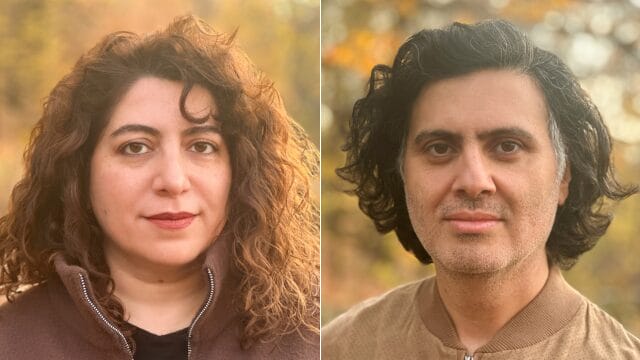
The Friend’s House is Here directors Maryam Ataei and Hossein Keshavarz. Keshavarz grew up in Middlesex County. Photo: Courtesy of Alma Linda Films
The last several days were “horrifying, so horrifying, because there is no internet,” Ataei said of Iran’s blackout. “We cannot talk to people. I think it was almost six days I did not hear my parents’ voice. I didn’t know what they’re doing. My whole family is there.”
She’s been frantically inspecting images of the protests to look for familiar faces. As protesters were fired upon with pellet guns and live ammunition, one of the secondary actors in their film was shot in the face, Keshavarz says. “She might lose her eyesight.”

Mahshad Bahraminejad in The Friend’s House is Here. Photo: Courtesy of Alma Linda Films
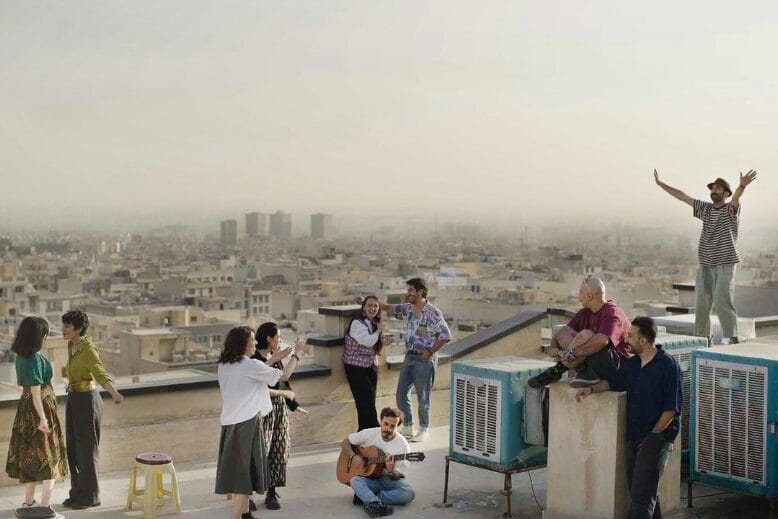
The Friend’s House is Here, debuting Saturday, January 24, at Sundance, acknowledges distressing circumstances in Iran. But in this movie, that troubling reality underscores the lives of artists awash in creative joy. Freedom of expression and ride-or-die friendship are the threads that hold strong in an uncertain and treacherous environment, one where women walk unveiled in the sunny city streets and truth tellers find a way, but not without risk.
Keshavarz and Ataei tell a woman-centered story about Iranian artists who persist despite threats to silence their voices. The performers act in underground plays, sing, dance, post on social media, and gather in apartments and on rooftops to talk about art and life. In the movie, the cityscape of Tehran seems to hold so much promise, so many dreams.
“We want to present the voice of this young generation,” Keshavarz says. “In their lives, resistance is an everyday thing, and so we feel so honored to work with them to make the film. And we feel the obligation, the responsibility, more than anything, to have their voices be heard during the festival, and before and after. We’re so heartbroken with what’s happening in Iran. We feel like no one should be attacked, no one should be killed because they want to have their voices heard.”

Mahshad Bahraminejad (left) and Hana Mana. Photo: Courtesy of Alma Linda Films
Mahshad Bahraminejad and Hana Mana star in The Friend’s House is Here as Pari and Hana, friends who live together in Tehran. The movie—in Farsi (Persian) with English subtitles—is narrative fiction, but takes inspiration from the real lives of Iranians. Pari writes and directs plays in Tehran’s underground theater community. In her play within the film, a friend is lost and thought to be arrested. Pari’s story, which can sometimes obscure the line between performance and reality, reflects similar fears simmering around her daily existence as an artist—fears that materialize in chilling fashion.
The movie’s title honors Where is the Friend’s House?, the 1987 film from iconic Iranian director Abbas Kiarostami.
Keshavarz, who spent his formative years in Middlesex County, and Ataei wrote, directed and produced The Friend’s House is Here, drawing from their experiences in Tehran.
“In the summer and the spring, I kind of felt this, both of us,” Ataei says of the current dangers in the city.
Their friend, a singer, was interrogated about why she posted herself singing online. Authorities presented her with printouts of her Instagram Stories and posts.
“After all this, she told us, ‘I don’t care anymore. I will keep posting. I will keep singing,’” Ataei says. “These kids are so brave.”
A filmmaking match made in Tehran
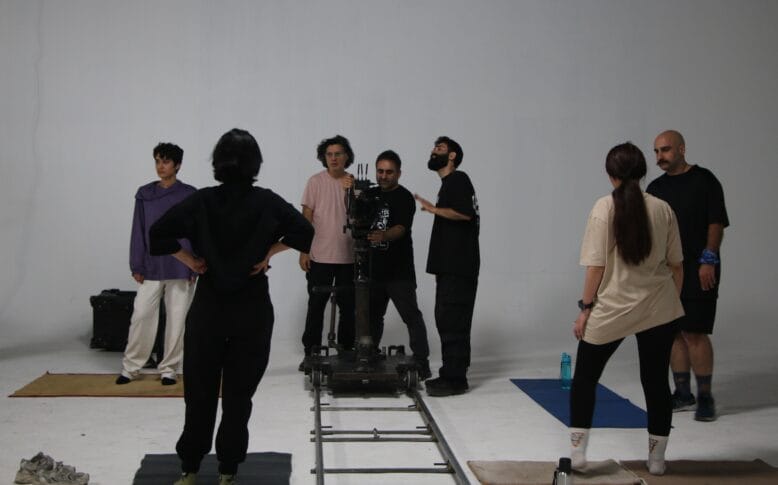
Behind the scenes of The Friend’s House is Here. Photo: Courtesy of Alma Linda Films
Ataei and Keshavarz grew up across the globe from one another, but they share a creative sensibility.
Ataei was born in Tehran. For Keshavarz, home was the Colonia section of Woodbridge. His Iranian American family moved there in 1986 after first living in Brooklyn and Staten Island.
Keshavarz was the youngest of eight children—seven of them boys—and he didn’t grow up to be the only filmmaker in the bunch. His sister, director Maryam Keshavarz, is a Sundance veteran. Maryam, the executive producer of The Friend’s House is Here, used their New Jersey childhood as inspiration for her 2023 film The Persian Version, which was filmed in Turkey and Jersey (including Colonia) and won the Sundance Audience Award. Her 2011 film Circumstance, produced by Hossein and Ataei, also won the festival’s audience award.
Hossein Keshavarz is making his Sundance directorial debut this week alongside Ataei. Like his sister, he attended Colonia High School and would visit Iran. His parents left before the 1979 Islamic Revolution.
“I always thought [Iran] was such an interesting and dynamic place that was kind of not really understood outside of Iran,” he says. “And I thought the people we hung out with were so full of life and fun, and so I always wanted to kind of show that. And then growing up in New Jersey, there were some parts for me that were tough, because I remember when I was a kid, we moved from New York, and there weren’t that many people who were not white in Colonia at that point, so it definitely was an adjustment. It was facing a lot of prejudice, and really made me think about why people think certain things, and how to…make a connection with people to try to overcome the prejudices.
“I had a lot of friends, but then something would happen in politics, or the Persian Gulf War when my name was Hossein, and then it would be pretty brutal,” Keshavarz says. “So at least that kind of made me very empathetic—understanding of other people’s point of views. I mean, my sister says, ‘You wouldn’t be a filmmaker if you didn’t have that experience.’”
Keshavarz met Ataei in Tehran after college. She studied film at Soureh University and earned her master’s in dramatic literature at Tehran University of Art (now Iran University of Art), performing in short plays when she was a student. Keshavarz, a graduate of Columbia University’s MFA film program, was heading to Iran to scout for a movie when his sister, already in Tehran, connected with Ataei at an International Women’s Day march that was raided by police.
“Maryam and my sister were running away and they both jumped over a barrier and hid together in a juice shop, pretending that they were just getting juice,” he says. “So then they became friends.”
From the beginning, Ataei and Keshavarz’s relationship was rooted in filmmaking.
“[Maryam] called me the day after, and she said my brother is also here, he also wants to make a film,” Ataei says.
Their first film together, Keshavarz’s feature directorial debut Dog Sweat (2010), another story about young Iranians filmed in secret, was nominated for an Independent Spirit Award (Hossein was up for the Someone to Watch Award in 2011). Keshavarz co-wrote the movie with Ataei, who produced the film.
“We have a very similar point of view even though we have different backgrounds,” Keshavarz says.
Art imitates strength
Ataei remembers Tehran’s underground art scene from when she was a college student.
“It wasn’t as much as the last three years after Woman, Life, Freedom,” she says, referring to the movement catalyzed by the death of 22-year-old Mahsa Amini while in police custody in Tehran in 2022.
When Ataei and Keshavarz returned to Iran in March, they witnessed the change.
“We saw so many underground plays,” Ataei says. “We went to so many underground places that play music. It was so fascinating to see that artists are putting themselves in risk and [getting] what they want to say, their voice, out there, no matter what.”

Photo: Courtesy of Alma Linda Films
The Friend’s House is Here shows how artists pull together when authorities target a treasured friend at the center of their community.
“One of the things that we want to kind of focus on, or even celebrate, is the resiliency of people, and how under duress, they help each other,” Keshavarz says. “Hopefully, this is a message that resonates with people outside of Iran and everywhere.”
The film’s artists are fictional, but they channel the actors playing them. Bahraminejad, who plays Pari, is co-founder of the Improvisation Group, an underground theater staple in Tehran.
“We just totally fell in love with her, and then we fell in love with the theater group, and so we kind of wrote the script with them in mind,” Keshavarz says. “It was constant conversation, and then we did a lot of improv, and so it was a very interactive process, interweaving their real-life stories…In a way, it’s kind of like the whole entire project was a project of friendship and a project of collaboration.”
The loose, naturalistic vibes of the scenes make it seem like the viewer is just hanging out with these people, watching them socialize and create art. Their ease with one another almost blots out the tension of what they’re doing. Almost.
One character tells Hana, Pari’s friend, that Iran is full of artists. “Let’s see if they let it stay like this,” she says.

Photo: Courtesy of Alma Linda Films
Hana Mana, who plays Hana, is an actor, dancer and dance teacher whose credits include music videos for Coldplay and the Iranian pop singer Ebi. Like Hana in the film, she is also known for posting Instagram videos of herself dancing with abandon in front of city landmarks.
“They don’t let anyone tell them what to do,” Keshavarz says of the characters in the film.
Their on-set counterparts? “They are not afraid,” Ataei says. Take the crew member who drove 12 hours to smuggle the film from Iran to Turkey during the protests, clearing several security checkpoints along the way just so the directors could get the movie to press screenings and Sundance.
“That’s how much they love making films,” she says.

Photo: Courtesy of Alma Linda Films
‘This is how you get arrested’
When The Friend’s House is Here was in production, power would often go out across Tehran.
Sometimes the directors happened upon a bit of luck. In one spot where they filmed, power lines were in full operation. But later, they saw officers using walkie-talkies and pointing at them. It turned out that the building across the street was occupied by security forces.
In another instance, Keshavarz and Ataei wanted to call in more extras for the film. A line producer shut down the idea.
“This is how you get arrested,” he told them. There was at least one other close call.
“You really have to choose who you’re going to trust, because it’s a life-or-death thing,” Keshavarz says. “But those people who are in your circle, you would do anything for. I would do anything for any of these actors, and they would do anything for each other and for us…It really just moved us. It’s always going to stay with us.”

Photo: Courtesy of Alma Linda Films
Making the choice to carry on as artists in the face of mounting danger isn’t one made lightly. Ataei’s aunt plays Pari’s mother in a scene that mirrors one from the director’s life. The character urges Pari not to put herself at risk of arrest by continuing to stage underground theater productions. It’s a sentiment that Ataei’s aunt had shared with her about her filmmaking.
Iranian director Jafar Panahi, whose film It Was Just An Accident is nominated for the Oscars for Best International Feature and Best Original Screenplay, has already served prison time in Iran. He vows to return to the country after promoting the film, which won the Palme d’Or at the Cannes Film Festival. If he returns, he can be arrested again, because when he was gone, he was sentenced to a year in prison.
Ataei says she will also return to Iran to see her family. “I decided, if this is what we want to do, we have to accept all the risk,” she says.
As depicted in the film, the loved ones of those who are arrested often have to scrape together large sums of money to pay their bail.
“It’s happening now,” Ataei says of the many thousands who have been detained by the state. “I keep hearing [about] the mothers, the sisters going to raise this money…sisterhood is so strong.”
High prices aren’t limited to the living. “The people they killed, they won’t give their bodies back until they pay some exorbitant amount,” Keshavarz says.
As U.S. Immigration and Customs Enforcement agents arrest people here in the United States without warrants, separating them from their families, Ataei thinks about Iran.
“I think there are moments that you have to speak out, otherwise you’re constantly losing your freedom,” she says. “And it will be a moment that you cannot. Your life will be in danger. And I think the people in Iran now know that. If they want to speak out, their life is in danger.”
Still, instead of choosing to comply or remain silent, many Iranians are speaking and protesting. “The protesters are united, trying to achieve their freedom, and so I hope we can unite behind them,” Keshavarz says. “This generation, they want to be honest and authentic. They don’t want to live one way behind closed doors and another way in public. So they’re reclaiming the public spaces. They’re dancing in the streets…Everyone we know is in the protest. These are the people who are pushing every single day of their lives.”
And even though it’s the protests that often make the headlines, writers, actors and performers are persisting all across Tehran.
“They are still doing improv,” Ataei says. “They work so hard. They talk about all these things happening right now. There is a theater group working with marginalized kids. They are doing their job. No matter what, they’re still fighting in different ways…I’m so proud of them.”
The Friend’s House is Here, premiering January 24 at the Sundance Film Festival, will be available to watch online through February 2. The run time is 1 hour and 36 minutes. Visit Sundance’s website for tickets to stream the movie.
Michael B. Jordan and Ethan Hawke, who both have Jersey roots, were nominated for Best Actor.
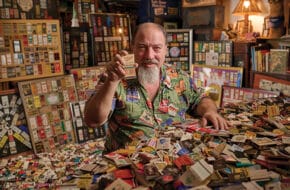
Richard L. Greene has a massive, 750,000-matchbook collection with thousands of New Jersey match covers.
