


1
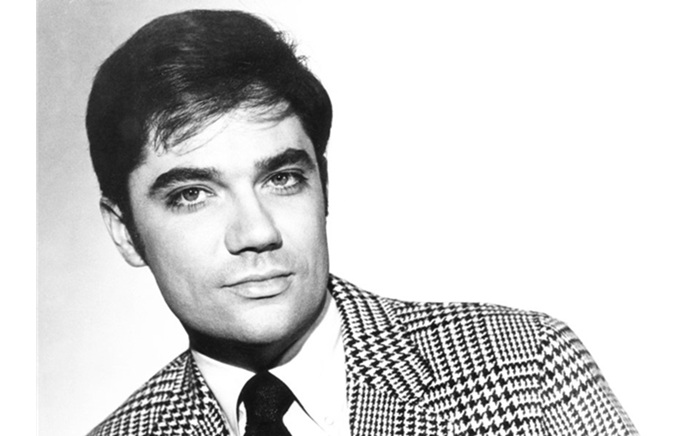
Rex Reed, in a publicity photo for the 1970 movie “Myra Breckinridge.”
There used to be a famous ad for high-end furs, featuring glamorous black-and-white photos of old Hollywood stars. “What becomes a legend most?” ran the tagline.
I don’t know that they ever thought of asking Rex Reed to pose. But they should have.
Reed, who died at home May 12 at the age of 87, was, within the small world of pop culture writers, a definite legend. He was also a diva. He was both funny and offensive, knowledgeable and sometimes willfully ignorant.
He was also irreplaceable.
There were two movie writers I first encountered as a child, both of whom immediately fascinated me. One was the singular critic Pauline Kael. The other was the celebrity profiler Rex Reed. They were polar opposites, in many ways — all they really shared was a love of verbal style, and an unshakable sense of the rightness of their own opinions.
But they both, in their own way, inspired me to follow the strange career I did.
Reed was born in Fort Worth, to an oil man and his wife. His family moved all over the South during his childhood, and it’s a fair guess to assume he did not easily fit in. (Dill in “To Kill a Mockingbird” might have been inspired by Truman Capote, but Rex was his spiritual heir.)
But Rex survived his childhood and got to LSU, where he earned a journalism degree, and then moved to New York, where he found a $75-a-week job at the 20th Century Fox publicity department. Laid off shortly after the studio disaster that was “Cleopatra,” he began freelancing, writing personality profiles for the New York newspapers.
That’s where I first read him. It was the first time I’d read anyone like him.

The cover of Rex Reed’s 1968 book, “Do You Sleep in the Nude?”
Over the years Rex would turn out dozens of these pieces, on people ranging from Tennessee Williams to Alice Cooper, later collected in anthologies with cheeky titles like “Do You Sleep in the Nude?” and “Conversations in the Raw.” He had a killer’s instinct for the perfectly apt simile, and getting the oh-no-she-didn’t quote.
The antic Sandy Dennis was described as entering a room “like a Yellow Cab with its doors open.” Happily dissing her ex Frank Sinatra’s recent marriage to Mia Farrow, Ava Gardner cackled, “I always knew Frank would end up in bed with a boy.”
Rex’s stories didn’t win him many friends, but they did win him readers. And taught me: If you’re interviewing someone, keep smiling. Keep them talking. And keep your recorder running.
But that kind of journalism wasn’t enough for Rex. He had once had dreams of being an actor — he finally became one, briefly, starring in the appalling “Myra Breckinridge.” (He had no regrets; the paycheck bought him his apartment at The Dakota.)
Afterward, it seemed he took to heart author Gore Vidal’s advice to never turn down a chance to be on television. Soon, he was appearing on everything from talk shows to game shows. And, more and more, he traded interviewing actors for reviewing movies.
It wasn’t a good fit, frankly. Without a live celebrity target in view, Rex now made himself the center of attention. Often, that came at the expense of the actors he was writing about. Nothing was off-limits, particularly a woman’s personal appearance, which he could cruelly ridicule.
Yet his critiques could still be perceptive, and surprising. You might not have assumed that he was an early and enthusiastic fan of “A Clockwork Orange,” for example, or gave the challenging (and brutal) film “Irreversible” a rave writeup. But he was never afraid to say how he felt.
Sometimes that would come in the middle of a screening. Suffering like the rest of us through Emma Roberts’ “Nancy Drew,” he theatrically sighed after it ended, “Well, she’s no Bonita Granville” — namechecking the actress who had played the role back in the ‘30s. (He was right, too.)
At other times, though, he could seem out-of-touch to the point of offensiveness, getting plots wrong or making remarks that were downright racist. I sat next to him during Scorsese’s “Killers of the Flower Moon,” which ended with an Indigenous dance of mourning and tribute. As it ended, Rex leaned over to me.
“I liked it better in ‘Annie Get Your Gun,’ ” he snarked.

REX REED, 1938-2026
Yet I always enjoyed seeing him, usually snazzy in dress slacks and a blue blazer. He was very much a symbol of a disappearing era, when gentlemen dressed like gentlemen, stars were stars, and critics were expected to always have a cutting witticism at the ready.
Rex increasingly didn’t understand this new generation, or its movies, and had become an unhappy presence at our annual New York Film Critics Circle votes, as we regularly championed indie pictures and not-ready-for-red-carpet performers. “When I was chair, we gave our awards to Paul and Joanne,” he’d grumble, and if you didn’t know who Paul and Joanne were … well, Lord, that was the whole problem, wasn’t it?
But — give him his due — the man was still doing the job, 60 years after he had emerged as part of the New Journalism. Although contemporaries like Nora Ephron and Gay Talese and Tom Wolfe always got far more respect, Rex was still plugging along. Few critics had a longer career. I certainly don’t know anyone who had a more impervious one (when The New York Observer briefly laid him off, an outcry from readers forced them to hire him back).
There will never be another like him. And there are some who will say, “Thank God.”
I won’t.
_________________________________________

CONTRIBUTE TO NJARTS.NET
Since launching in September 2014, NJArts.net, a 501(c)(3) organization, has become one of the most important media outlets for the Garden State arts scene. And it has always offered its content without a subscription fee, or a paywall. Its continued existence depends on support from members of that scene, and the state’s arts lovers. Please consider making a contribution of any amount to NJArts.net via PayPal, or by sending a check made out to NJArts.net to 11 Skytop Terrace, Montclair, NJ 07043.
