


The 4th of July is all about fireworks, parades, and backyard BBQs, but the real story behind Independence Day is full of surprising twists, strange traditions, and even a few “wait, what?!” moments. What better time to learn them than now, as America celebrates its 250th birthday?
These 4th of July fun facts go beyond sparklers and hot dogs. They mix surprising history, quirky traditions, and kid-friendly “weird but true” moments that make learning about Independence Day exciting. Along the way, we’ll explore the history of the 4th of July, how traditions began, where patriotic symbols come from, and how Americans celebrate today.
If your kids love trivia, this article is packed with Independence Day fun facts that are perfect for dinner conversations, car rides, and classroom fun. Check out our Ultimate Collection of Fun Facts and Mind-Blowing Trivia for Kids for even more interesting facts, including our list of 125 cool, weird, and random facts kids love.
Featured Businesses and Offers
What is the History of the 4th of July?
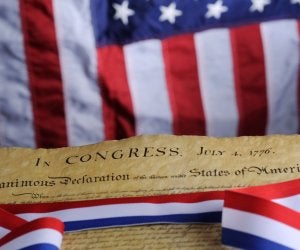
The history of the 4th of July begins in 1776, when the Continental Congress officially adopted the Declaration of Independence. This important document announced that the American colonies were separating from Great Britain and forming a new nation. Independence Day celebrates freedom, specifically America’s independence from British rule.
But here’s something surprising: not everyone celebrated right away. In fact, early celebrations were small and very different from what we see today.
The real history behind the 4th of July is more complicated than most kids learn in school. Traditions developed slowly over time, and it took years for the holiday to look anything like the fireworks-filled celebration we know now.
How Did 4th of July Traditions Begin?
Many of today’s traditions started shortly after 1776, but they evolved as the country grew.
Fireworks became part of Independence Day because they symbolized celebration and victory. Even in 1777 (just one year after the Declaration was adopted), cities held fireworks displays to mark the occasion.
Parades became popular in the 1800s. Communities organized marches with bands, flags, and patriotic speeches to show pride in the new nation.
Food traditions like BBQs and picnics grew naturally over time. July weather made outdoor gatherings ideal, and as more Americans gained the day off work in the late 1800s, family cookouts became a central part of the celebration.
As transportation improved and towns expanded westward, celebrations spread across the country. What started as formal speeches and cannon salutes eventually became a nationwide summer holiday filled with family fun.

Where Do 4th of July Symbols Come From?
Fireworks are linked to the holiday because they represent excitement, triumph, and the “rockets’ red glare” mentioned in the national anthem.
The American flag features 13 stripes for the original colonies and 50 stars for today’s states. Its colors also carry meaning:
- Red symbolizes bravery.
- White represents purity.
- Blue stands for justice and perseverance.
Red, white, and blue became patriotic colors because they are part of the flag, and over time, they began to be used on decorations, clothing, and even desserts. These symbols didn’t become popular overnight. As the country grew, Americans embraced shared imagery to express national pride.

What Are Some Surprising and Fun Fourth of July Facts for Kids?
1. The Declaration of Independence wasn’t actually signed on July 4. It was adopted on that date, but most signatures happened later.
2. Two US presidents, Thomas Jefferson and John Adams, died on July 4, 1826—exactly 50 years after the Declaration was adopted.
3. One president, Calvin Coolidge, was born on July 4.
4. Americans eat over 150 million hot dogs on Independence Day.
5. Fireworks weren’t invented in America. They date back to ancient China over 2,000 years ago.
6. The first state to make Independence Day an official state holiday was Massachusetts in 1781.
7. The 4th of July became an unpaid federal holiday in 1870, then became a paid holiday for federal employees in 1941.
What Are Some Weird or Unexpected Independence Day Fun Facts?
8. The Liberty Bell in Philadelphia weighs 2,080 pounds!
9. The Liberty Bell isn’t actually rung on July 4. It’s gently tapped 13 times to honor the original colonies.
10. Early 4th of July celebrations included cannon blasts and bonfires.
11. Some early Independence Day events were extremely loud and chaotic, with parades, gunfire, and fireworks filling the streets.
12. Competitive-eating competitions have become an Independence Day tradition in some cities. Each year, you can watch Coney Island, New York’s famous hot dog-eating contest on TV!
13. The first 4th of July parade took place in Bristol, Rhode Island in 1785.
14. Thomas Jefferson hosted the White House’s first 4th of July party in 1801.
How Can Kids Use These 4th of July Fun Facts?
These Independence Day facts and trivia aren’t just interesting—they’re fun to share!
Kids can:
- Use them for trivia games at family BBQs
- Include them in school projects about American independence history for kids
- Share them during car rides on the way to fireworks
- Add them to party decorations or handmade posters
- Bring them into classroom discussions before summer break
Learning why we celebrate 4th of July helps kids connect fireworks and fun to real history.
FAQs: 4th of July Questions Kids (and Parents) Ask
Q: What is the 4th of July really about?
A: It celebrates the adoption of the Declaration of Independence in 1776 and America’s decision to become an independent nation.
Q: Did the Declaration of Independence get signed on July 4?
A: No. It was officially adopted on July 4, but most delegates signed it later.
Q: Why do we celebrate the 4th of July with fireworks?
Fireworks symbolize celebration and victory and have been part of the holiday since 1777.
Q: Why are red, white, and blue important?
A: They are the colors of the American flag and symbolize bravery, purity, and justice.
Q: What are some fun facts about the 4th of July for kids?
Two presidents died on July 4, and one was born on July 4!
Q: Is the 4th of July only celebrated in the United States?
A; Independence Day is a US national holiday, though other countries celebrate their own independence days on different dates.
Q: Are 4th of July facts appropriate for kids?
A: Yes! When shared in a kid-friendly way, they help children understand American history while keeping things fun and engaging.
