


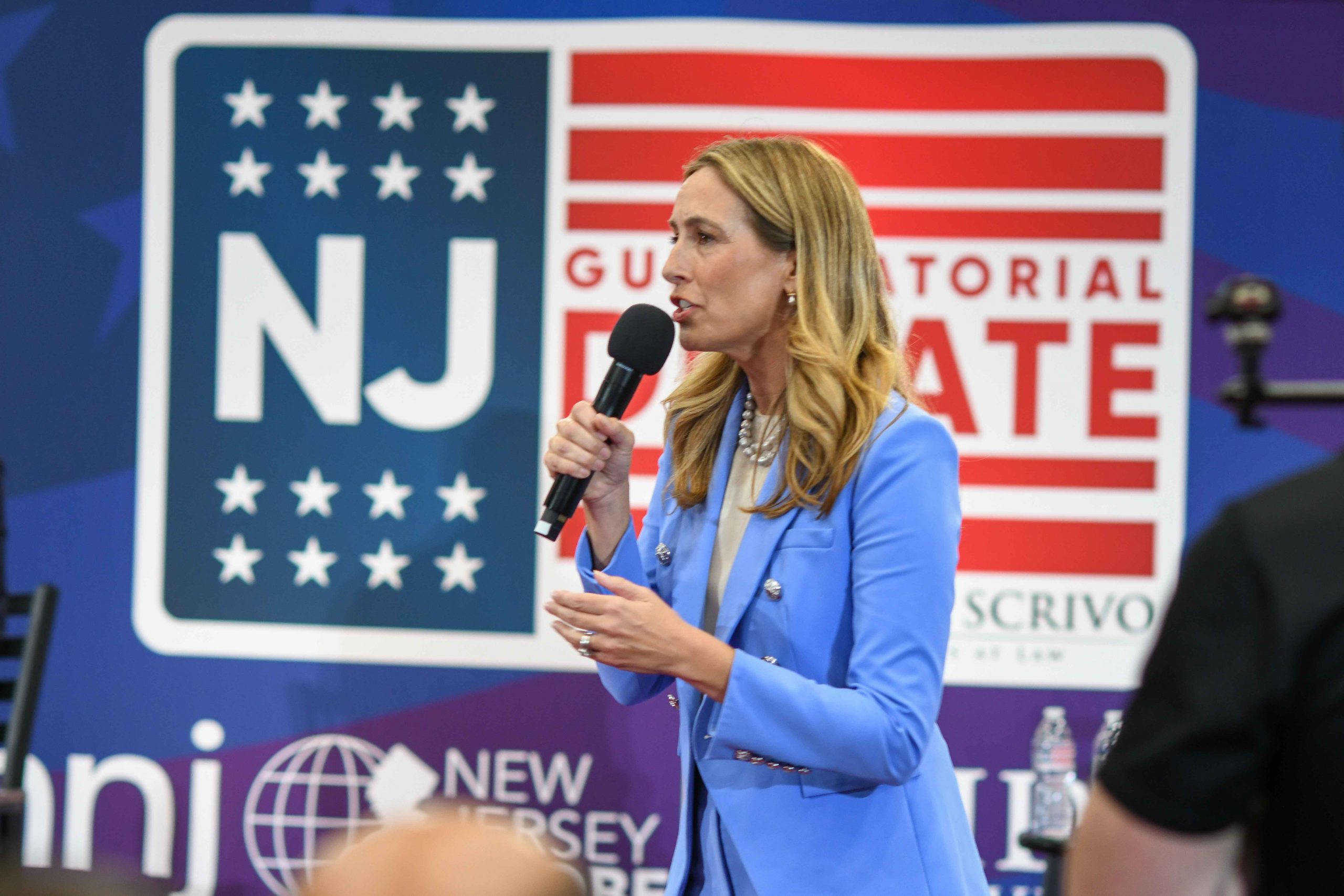
In the first gubernatorial debate, less than two weeks ago, the nominees were asked whether they would consider raising the sales tax if elected governor.
After weeks of bickering between Rep. Mikie Sherrill (D-Montclair) and GOP opponent Jack Ciattarelli over a seconds-long audio clip about Tennessee’s 10% sales tax, the issue was top of mind. Sherrill gave what seemed to be an honest — though potentially disadvantageous — answer: “I’m not going to commit to anything right now, because I’m not just going to tell you what you want to hear.”
Her answer sparked criticism from Republicans, including online attacks from Ciattarelli and comments from a GOP strategist who called the answer a “red flag.”
Less than 24 hours after she said she wouldn’t commit to a certain course of action, her campaign distributed a press release committing not to increase the sales tax. Despite the shift from noncommittal to committal, her statement implied that this had been her stance the entire time: “I have been very clear on this: [a 10% sales tax is] off the table for me and I will not raise the sales tax as your governor,” she said.
Centenary University President Dale Caldwell, Sherrill’s nominee for lieutenant governor, repeated the sentiment while speaking to reporters after the sole lieutenant governor debate on Tuesday: “She’s made it very clear she’s not raising sales tax,” he said.
Sherrill’s vow not to raise the sales tax is the latest development of the bizarre, at times confusing, spat between her and Ciattarelli over each other’s stances on sales tax. Democrats released ads attempting to tie Ciattarelli to a 10% sales tax; the ads use audio taken from a Bergen County rally where Ciattarelli described Tennessee’s tax policy after an attendee asked if he would consider abolishing the income tax and making up the difference with an increased sales tax. Ciattarelli and his campaign called the ads misleading and said such a policy was never under consideration.
The controversy led to further scrutiny of the candidates’ tax plans. Micah Rasmussen, the director of the Rebovich Institute for New Jersey Politics at Rider University and a panelist at the debate where Sherrill said she wouldn’t commit to a sales tax plan, said he wasn’t surprised by Sherrill’s shift to disavowing any sales tax increase.
“You can’t attack your opponent for leaving something on the table and then leave it on the table yourself,” Rasmussen said. “That’s not an intellectually consistent position.”
Affordability, including tax rates, has been a top concern for voters during the campaign. Each campaign has accused their opponent of wanting to raise taxes or implement irresponsible tax schemes. The debate over taxes has been especially jumbled — Rasmussen said Sherrill’s comment that she’s been very clear is “laughable.”
Rasmussen said Morris County Sheriff James Gannon, Ciattarelli’s nominee for lieutenant governor, further “muddied the waters” during Tuesday’s lieutenant governor debate.
Moderators asked Gannon whether a Ciattarelli governorship would consider increasing taxes on millionaires; Gannon said it’s on the table, but said he would be “careful” of such taxes, arguing that millionaires employ many New Jerseyans. The moderator followed up and asked whether new taxes were on the table, and Gannon said officials have to look at the system.
“We have to look at it, you have to look at the whole thing,” Gannon said. “What I’m saying is, millionaires, we can’t just beat up the millionaires. The millionaires, many times, are employers; they’re employing us.”
Ciattarelli campaign manager Eric Arpert has said that Gannon meant to say that cutting taxes is on the table, not raising them. And though Gannon said throughout the debate that a Ciattarelli administration would focus on cutting taxes, that won’t stop the Sherrill campaign from sharing the clip of him saying “taxes are on the table.”
Rasmussen said there will always be confusion about what, exactly, “on the table” means.
“Everybody has a different idea in their mind for what ‘on the table’ and ‘off the table’ really means. … We’re using that phrase very broadly, it seems, and it’s leading to a fair amount of legitimate confusion.”
