


The basics:
- NJBIZ panel explores current recruiting, retention concerns facing HR teams
- Speakers cite remote work expectations, long hiring cycles & skills gaps
- Compensation pressures persist amid pay transparency laws, post-COVID shifts
- Panelists note shift from job-hopping to “experience-hopping” career paths
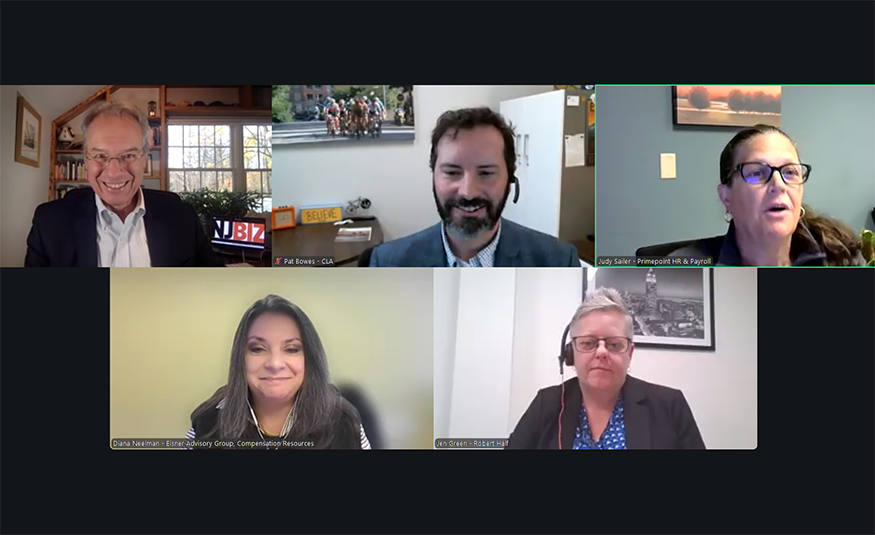
NJBIZ held its latest virtual panel discussion Nov. 18 on a subject of great import to the business community: recruitment and retention.
Moderated by NJBIZ Chief Editor Jeffrey Kanige, the panel included:
Inside HR
Over 90 minutes, the group discussed a slew of major topics in this space, such as talent attraction and retention, boosting engagement through culture and growth opportunities, the role of technology, building a talent pipeline and more – as well as took questions from those watching.
Kanige kicked off the discussion with a question on the state of play for HR professionals.
“I’d like to start just by getting a sense from all of you about what it’s like out there. Because in my speaking to business owners and corporate executives, I hear a lot about different kinds of problems they have with recruiting and retention that seem to be different than they were. Perhaps some of it’s still pandemic-related,” said Kanige. “I’m curious as to what you’re experiencing and what you’re hearing from folks you work with? What’s it like doing your job these days?”
“It’s scary some days – not going to lie,” said Sailer. “I keep saying to HR professionals that I know – you need allies. We have a lot more, in terms of mental health issues – things that in the past, we never really dealt with. It was not HR’s issue to deal with. That was something personal, aside from. And now, we’re developing accommodations for appointments and what they need; and helping to support the staff.
“HR has got, maybe 35 hours a day, they’re supposed to be managing all of these differences. Some of it has definitely changed.”
Compensation conundrums
Neelman said, “COVID really upended the compensation conversation. What do we pay for remote work? Where do we apply geographic differentials? Where are we hiring employees from? We saw the peak in 2022–2023 period with talent. It was an employee’s market. We’re leveled off now – and we’re starting to see a little bit of more of a regular rhythm on compensation.
“But there’s still a lot going on for professionals in the field – so HR really needs to pay attention to competitive compensation. New Jersey has pay transparency laws that we need to pay attention to. So, really, never a moment where you can take a breath and say, ‘OK, I’m done with compensation.’ It’s an ongoing matter.”
“We deal with small, mid, and large companies – hiring is definitely taking a lot longer than it did, I would say two years ago,” said Green. “Some of the challenges that we’re seeing are what everybody’s talking about – it’s a candidate’s market now. Hybrid schedules, remote schedules are out there – and if they’re not being offered, candidates are passing on opportunities.
Replay: Recruitment & Retention
Click through to register to watch the full panel discussion!
“Or they’re requiring more money to go onsite. Lot of economic uncertainty right now – that the needs are there. The pent-up demand is there. But there’s a lot of layers in the approval process. There’s a lot of stakeholders involved in the interview process.
“It’s taking a lot longer to just even go through interview processes. So, then they’re losing candidates. And, then obviously, the skills gap – that’s a big thing right now as well.”
‘Experience hopping’
Bowes echoed those sentiments.
“First of all, I just want to say that I agree with everything everybody said,” said Bowes. “It’s spot on. Those are things we’re seeing as well. Maybe something I would add is – what we’re seeing is, this is very new, it’s almost like the concept of what it means to have a career is changing right in front of us. And organizations like all of ours are being challenged to adapt to that.

“And I think perhaps this is maybe what I can think of as the third major evolution of what a career is. If you go all the way back to the first one – maybe being one where your career, it’s kind of what you did. And you did it at the same place for your entire career. This evolved into a particular job that you had, or a role that you played – and you would take that and move it from organization to organization. If you did it too quickly, you were maybe considered a ‘job hopper’ or something like that.
“What we’re seeing right now is something really, really different. And that is, people aren’t really moving from job to job. They’re moving from experience to experience. So, we see it as there’s no real job hopping happening. There’s experience hopping. People are defining their own careers as – what is the series of experiences that I want and that I can get. And I’m willing to go from place to place, sometimes very quickly, and even boomerang back to what whatever I need in how I’m defining the career that I have.
“I think it’s really challenging us in terms of what we used to lay out to people as a traditional career path – and what are the options. They used to be very prescriptive and defined. We have to rethink all of that in order to match where people are at.”
Stay tuned for further coverage of this panel discussion in the Nov. 24 NJBIZ issue.
