


He won the gold—now it’s time for some porcelain.
Viewers watched in awe as Jersey’s own Jack Hughes scored the heroic winning goal at the Olympics—and, perhaps, in even greater awe as he did so with a mouthful of bloodied, broken teeth after taking a high stick to the mouth in the third period. But it’s no surprise that Hughes got back in the game so quickly, according to the official oral surgeons for the New Jersey Devils, for whom Hughes is a star forward.
“It’s badge-of-honor kind of stuff,” says Dr. Jason M. Auerbach, founder and co-CEO of Riverside Oral Surgery. “These are tough, tough guys….They’re so tough, they get out there irrespective of what the injury is. Once it’s determined they’re stable, they play, they do what they have to do.”
Auerbach, who has not spoken to or examined Hughes since his injury, says it appears that none of Hughes’s teeth were actually knocked out during the game. Rather, Auerbach assesses, it looks like Hughes totally fractured his left front tooth, fractured the edge of his right front tooth, had a tooth or two get pushed out of place, and damaged bottom teeth.
“It looked like the stick must have caught him at an angle,” says Auerbach. “What’s specific about hockey injuries in general is that they are high-velocity injuries: stick, skate, puck. There’s energy associated with those injuries, and they tend to be significant in terms of fractures.”
Right now, Hughes is likely facing swelling, with inflammation typically peaking at 48 hours after an injury.
From a dental professional’s point of view, the first step in a case like this would be to examine the patient for soft-tissue lacerations and clear fractures. An X-ray would be performed to assess damage to the bone or tooth.
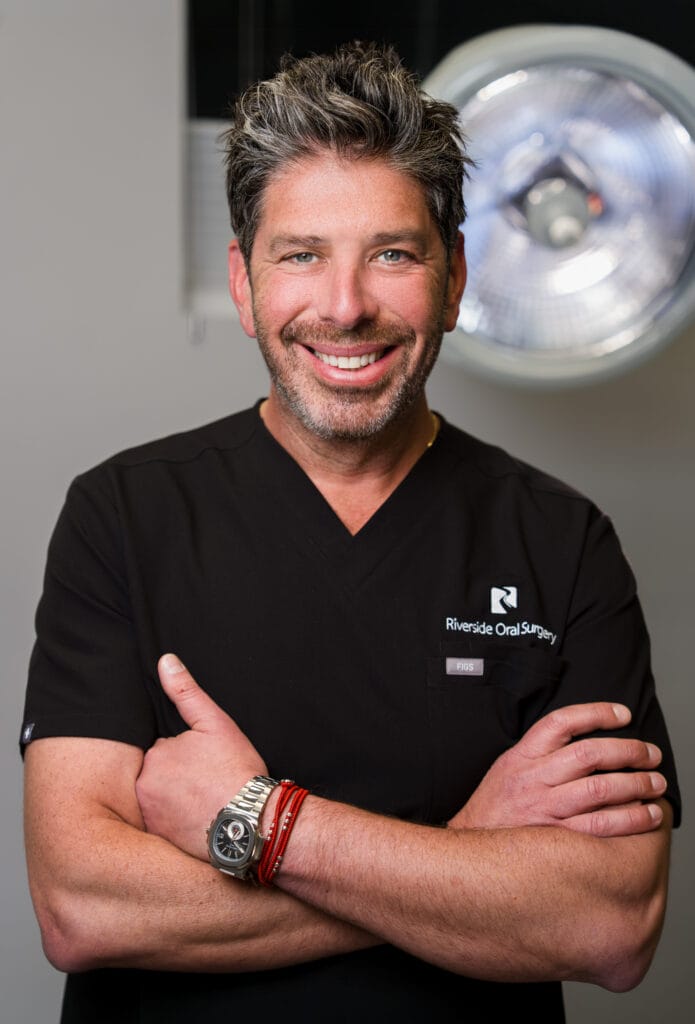
Dr. Jason M. Auerbach Photo: Courtesy of Riverside Oral Surgery
In Hughes’s case, Auerbach says it “looks like teeth that took the brunt of the force rather than the jaw structure.”
“It looks like the likely outcome is that he’ll need some restorative dentistry (veneers or bonding) rather than oromaxillofacial surgery. It looks bad because he’s bleeding.”
Hockey injuries to the teeth are “very common,” Auerbach says, especially since a lot of NHL players choose not to wear protective mouth gear. Some players have a missing tooth or two; others even more.
“With the size of a puck, you could lose four five teeth in one incident,” says Auerbach.
Oftentimes, players—especially younger ones in the beginning of their careers—will not get an implant after losing a tooth, since it could just happen again. Instead, many choose partial dentures, while others just rock a toothless look.
“Ultimately, they hopefully have many years of playing,” Auerbach says.
In terms of high school sports, Auerbach says his office sees injuries from hockey, basketball, soccer and other activities. In children, however, tooth implants cannot be placed until bone growth is complete. In some high schools, mouth guards in sports are not mandated—something Auerbach would like to see change.
As for Hughes, he’s ready for a dental visit when he gets back home to the States. As he told reporters after the game, “I’m lucky I’m from the best country in the world, and we’ve got great dentists there, too. I’m lucky I’m American, and they’re gonna fix me right up.”
Team USA paid heartfelt tribute to the late NHL star Johnny Gaudreau after its epic win against Canada in the men’s Winter Olympics hockey final on Sunday.

Despite the wrongful detainment by ICE of one of its owners, Emilio’s Kitchen in Belmar pulls off a grand opening.

Which local restaurants are your tried-and-true favorites? Fill out our annual poll for the chance to win dinner for two.

Plus: NYC’s top-rated bagel spot is coming to Jersey, and Millburn Deli in Morristown temporarily closes for a relocation.
