


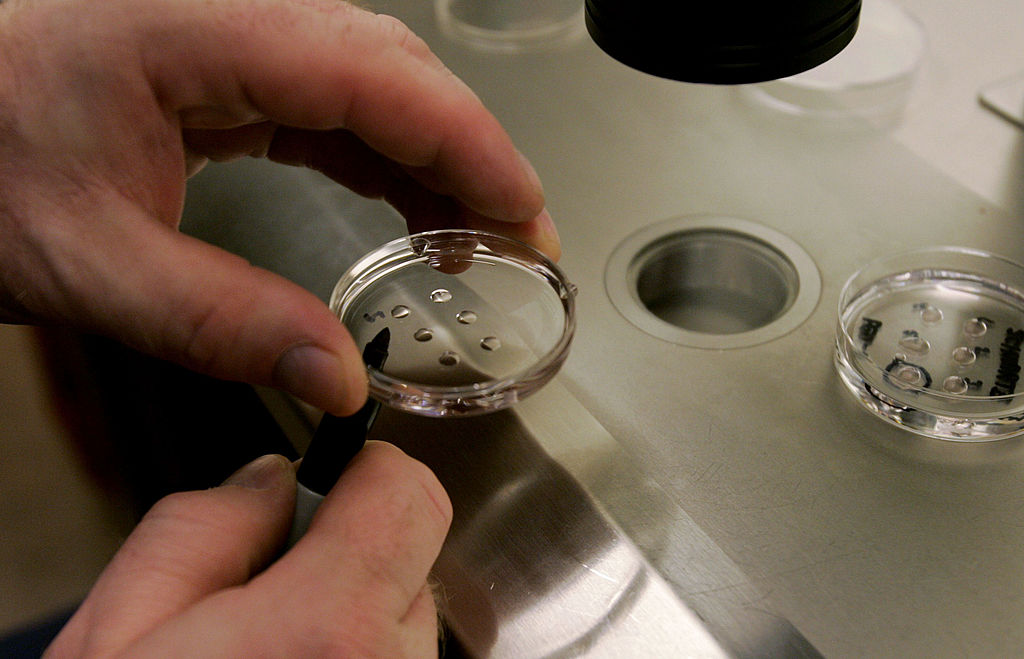
Health facilities that store frozen human embryos and eggs have new licensing requirements under New Jersey rules that took effect Monday. (Photo by Sandy Huffaker/Getty Images)
Health facilities in New Jersey that store frozen human embryos and eggs have new licensing requirements and rules to guard against operational failures under regulations that took effect Monday.
State lawmakers ordered the state Department of Health in a 2019 law to create statewide standards for hospitals, reproductive laboratories and medical practices, in-vitro fertilization clinics, and cryopreservation facilities where such tissue is stored.
The new rules require the facilities to be accredited, apply for licensure, and follow new standards on equipment safety and maintenance, emergency preparedness, quality management, recordkeeping, and reporting.
New Jersey officials say we are the first state to adopt a regulatory framework specifically targeting such facilities, which otherwise are overseen by federal agencies, including the Centers for Disease Control and Centers for Medicare & Medicaid Services.
Gov. Phil Murphy said New Jersey’s new rules set a national standard for safe embryo storage.
“Undergoing fertility services can be an emotional and life-altering process for New Jerseyans trying to start a family. The last thing patients undergoing fertility services should have to worry about is whether their eggs and embryos are stored correctly,” Murphy said in a statement. “By setting clear regulations, we are holding embryo storage facilities in New Jersey to a higher standard and ensuring patients focus on what matters most in their pursuit of parenthood.”
The new rules come as people increasingly rely on reproductive medicine and technology. New Jersey fertility clinics performed nearly 13,000 assisted reproductive technology procedures in 2022, resulting in more than 5,500 births, according to the Centers for Disease Control and Prevention.
Key provisions of the new rules require backup power systems and oxygen sensors in rooms where liquid nitrogen is used; remote alarms on cryogenic storage equipment; written policies on how reproductive tissue should be disposed of if a facility closes or a client dies; and reporting on equipment issues that could affect stored reproductive tissue.
Violators face fines and license suspension, revocation, or renewal refusal.
“With these rules, New Jersey is setting a national benchmark for protecting people hoping to start or grow their families as they navigate one of the most significant and complicated periods in their lives,” acting Health Commissioner Jeff Brown said in a statement.
GET THE MORNING HEADLINES.
