


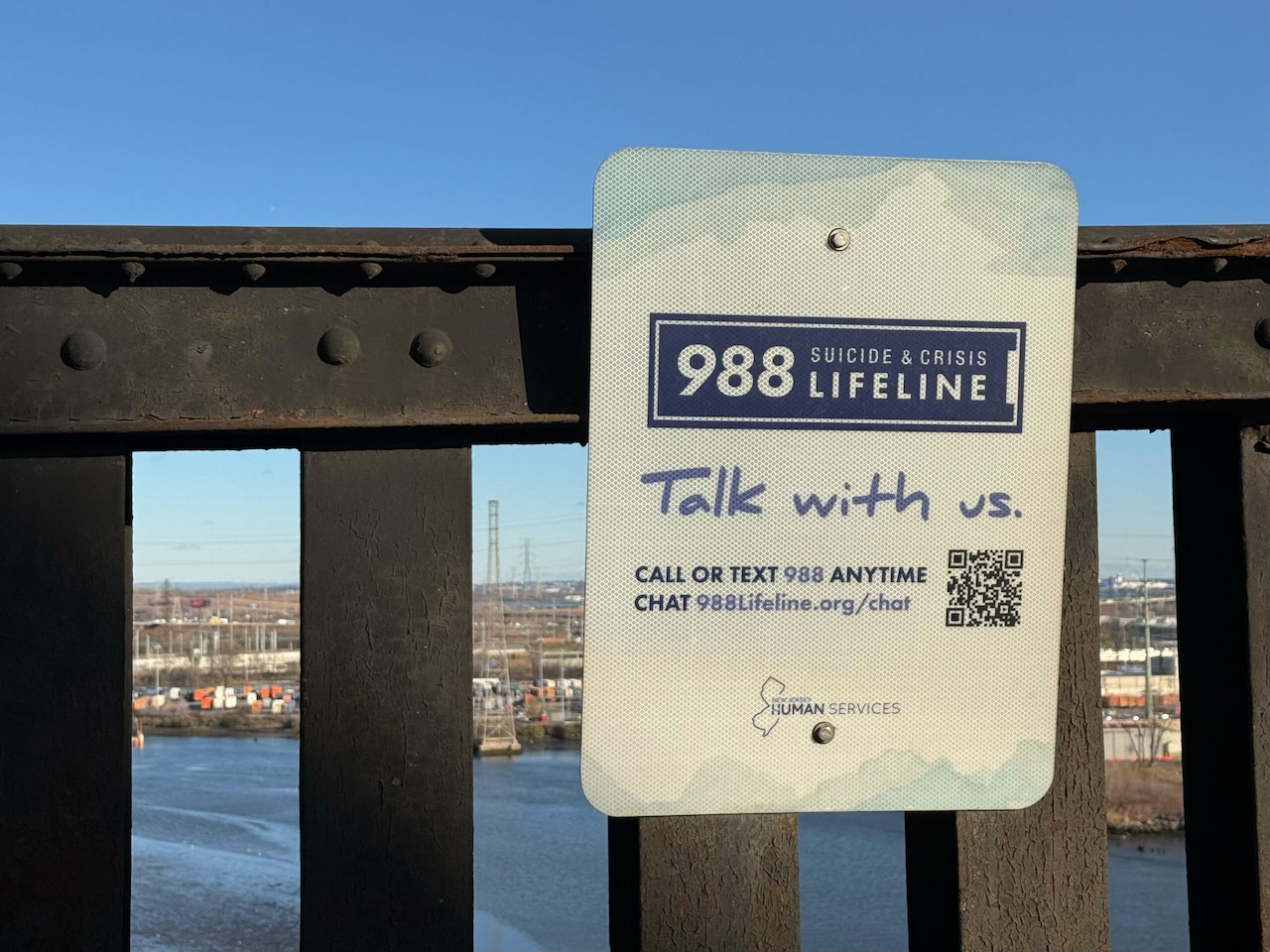
Editor’s note: This story was shared as part of a content-sharing agreement between Mosaic.NJ.com and NJ Spotlight News. You can follow them on Facebook and Twitter (or X).
The plan to create a permanent and dedicated source of funding for a state hotline that helps people experiencing mental health emergencies remains uncertain in the remaining weeks of Gov. Phil Murphy’s tenure.
With strong backing from mental health advocates, a bill that cleared a key Senate committee last month calls for a 40-cent per-month fee on all phone lines in New Jersey to fund the state’s 988 Suicide & Crisis Lifeline.
In recent years, the hotline has seen a significant increase in calls in one of the nation’s most densely populated states.
The legislation, co-sponsored by Sen. Joseph Vitale (D-Middlesex), the chair of the Senate Health, Human Services and Senior Citizens Committee, would dedicate the fee to fund the 988 system as a matter of state law.
According to Murphy administration estimates, the fee would raise an estimated $61 million annually.
“The programs are so vital to our citizens, our residents and those people who are at risk, it needs to be a sustainable source of revenue,” Vitale said in an interview with NJ Spotlight News.
“It shouldn’t be subject to budget negotiations, whether in good times or bad times.”
“It literally will save lives and give people access to mental health services that they need at the most critical time in their life, particularly when … they’re contemplating taking their own life,” he said.
The push by Vitale and other lawmakers comes after Murphy included a similar proposal in an annual budget he put forward during a joint session of the Legislature in February.
However, on the eve of an election year that would be decided by concerns about affordability and taxes, Democratic legislative leaders did not advance the legislation needed to establish the fee when they approved what became the state’s nearly $60 billion annual budget for the current fiscal year in late June.
In the wake of that decision, mental health advocates called the failure to act a huge, missed opportunity, especially for a state that has experienced a series of high-profile, mental-health response system breakdowns in recent years.
And with the term-limited Murphy due to leave office next month, the advocates are on the verge of losing a key ally in the governor’s office.
“Federal startup funds are ending. So without this fee, crisis centers could close before they’re fully operational,” Jennifer Hughes, the interim CEO of NAMI NJ, said in an interview with NJ Spotlight News.
However, in recent weeks, lawmakers have revived the proposal amid the current lame duck session of the Legislature.
The legislation seeking to establish the fee received widespread support from mental health advocates, including Christie Schweighardt of the New Jersey chapter of the American Foundation for Suicide Prevention during a Senate Health, Human Services and Senior Citizens Committee hearing last month.
“Almost exactly 10 years ago, I had to call what is now known as 988. I didn’t see a way out of what I was going through,” Schweighardt said during her testimony. “Thanks to this crisis service, I was immediately connected with someone who talked me down and helped me find long-term behavioral health resources that saved my life.”
In New Jersey, when a person dials 988, the call is taken by a trained crisis counselor who provides support and shares resources that may be helpful.
If the counselor determines additional care is needed, a local mobile crisis response team is dispatched to the caller. The state launched the mobile crisis response teams in April.
Across the country, communities that have robust crisis services estimate that they dispatch mobile crisis response teams to less than 10-20% of 988 hotline callers, according to the National Alliance on Mental Illness.
California, Oregon, Washington, Nevada, Colorado, Minnesota, Vermont, Delaware, Maryland, Virginia, Illinois and New Mexico have already passed legislation that requires fees on phone lines — and, in some states, voice-over-internet lines, too — to fund the 988 hotline within each state, according to the National Alliance on Mental Illness.
Under the pending bill, the monthly fee will be collected by mobile telecommunications companies and put into a state trust fund account. The money in the trust fund must then be used to maintain effective routing and responding to calls, texts and chats made to the hotline.
The money would also need to be used to sustain mobile crisis outreach response teams and crisis stabilization services, according to the legislation. These services include those provided at crisis stabilization and receiving centers, which would aim to offer short-term care to people in need of immediate support during a mental health crisis and serve as an alternative to hospital emergency rooms. Crisis diversion homes, which would serve as temporary transitional housing for people experiencing mental health crises, would also be included in these services funded under the bill.
The stabilization centers and the crisis diversion homes will be opening “on a rolling basis” beginning in January, according to Tom Hester, a spokesperson for the state Department of Human Services.
Meanwhile, the bill would also aim to provide funding for services offered bycertified community behavioral health clinicsacross the state and for advertising campaigns to highlight the availability of the number.
Schweighardt, of the American Foundation for Suicide Prevention, said in her testimony that everyone in New Jersey deserves the kind of support she received from the hotline.
“New Jerseyans deserve to have an alternative to 911 in mental health crises. New Jerseyans deserve to get connected to long-term behavioral health care. Enacting this 988-telecom fee supports that and more,” Schweighardt said.
But during the Senate committee hearing last month, people representing statewide business interests and Republican lawmakers raised concerns about adding to the high taxes that New Jersey residents already have to pay.
Sen. Robert W. Singer (R-Monmouth) said the phone fee could have been included as part of the current state budget, but majority Democrats waited until after the November elections to move the bill.
“Now it’s another tax on businesses and people — another $60 million in a $60 billion budget,” Singer said.
“I’m not against the number,” Singer added. “I’m not against putting it in the budget permanently. But I’m against another tax.”
The bill has been referred to Senate Budget and Appropriations Committee, where it has yet to come up for consideration.
