


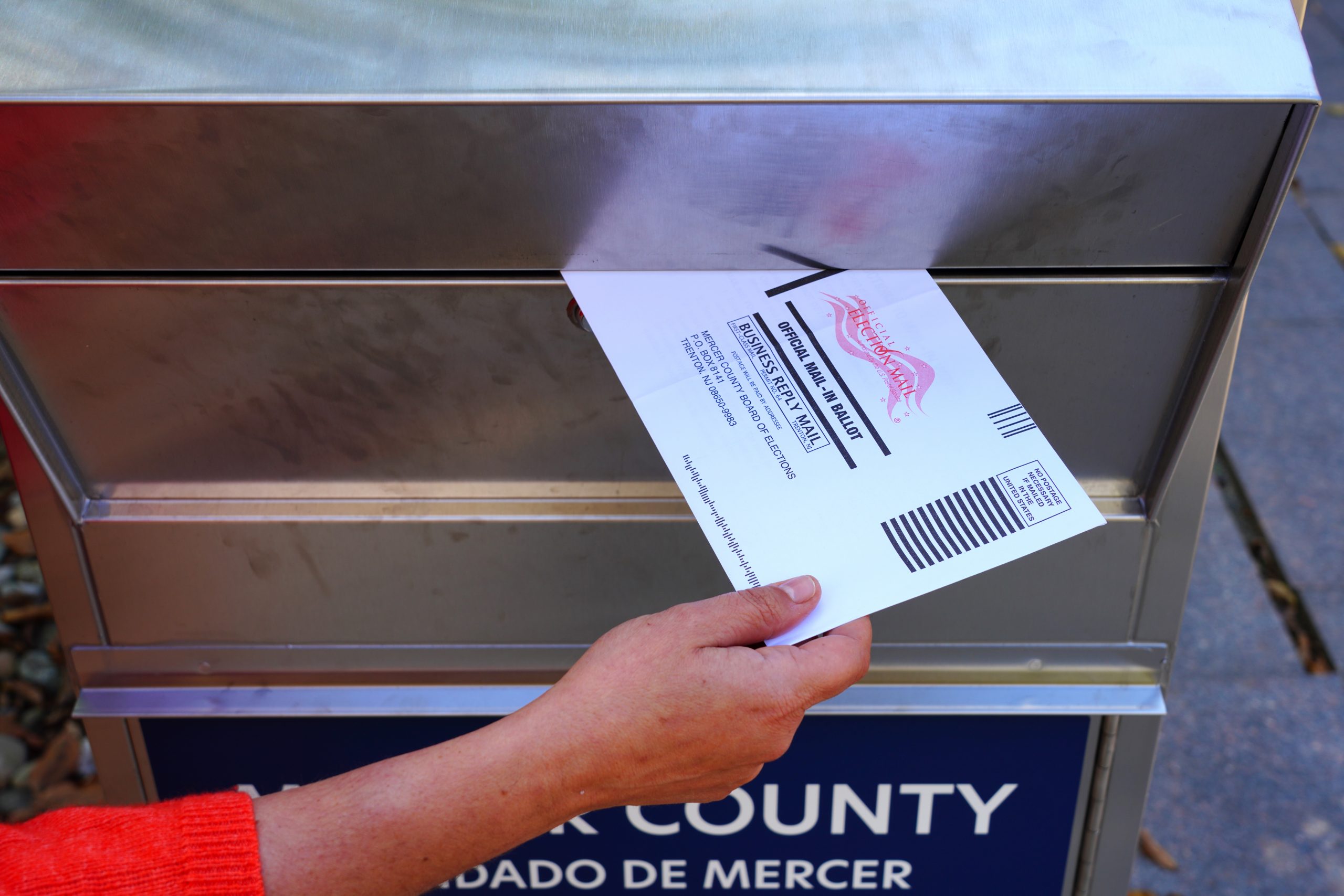
In a series of hearings on Thursday and Friday, a Superior Court judge settled disputes on more than 100 ballots that had caused a deadlock within the Atlantic County Board of Elections.
The disputes in question were layered and convoluted.
For some 40 provisional ballots, the board, split between two Republicans and two Democrats, had deadlocked on whether to accept the signatures, which would usually lead to a Superior Court judge breaking the tie. However, staffers for the board had apparently violated protocol when they sent “cure letters” to voters, allowing them to address the issues; cure letters, however, are only supposed to be sent after ballots have been rejected, and the deadlocked board had not technically rejected the ballots.
Superior Court Judge M. Susan Sheppard, who offered further instructions and examples on signature analysis, sent the ballots back to the board on Thursday evening, instructing them to try again. The board reached unanimous decisions on most of the ballots on their second try, only deadlocking on a final pair of mail-in ballots belonging to an elderly couple in Galloway. The couple had mistakenly placed their ballot into the return envelope designated for their partner, and one of them had failed to write the address on the return envelope.
The “crisscross” issue, as one board member put it, is somewhat common, and the judge and attorneys agreed it was a curable issue and allowed the first vote to count. Sheppard held off on making a ruling on the second, improperly filled ballot, opting to read case law to determine whether that problem was curable.
Sheppard also found that the board had not followed the law in terms of notifying voters that their ballots had been rejected and could be cured. The law, Sheppard said, required the board to reach out to voters via mail and phone, when possible. The board had only done the former. As such, Sheppard ordered the extension of the curing deadline, which was Nov. 15, so the board could contact the voters via phone; those voters have until Friday afternoon to submit their cure.
Sheppard delivered additional rulings on 63 provisional ballots that had been sent to her for a tiebreaking vote. The board had deadlocked over whether to accept those provisional ballots due to signature discrepancies. Sheppard rejected 16 of the 63 and accepted the rest.
Editor’s note: In a ruling on Friday afternoon, Sheppard rejected one ballot becuase the voter submitted a cure letter but neglected to sign it.
