


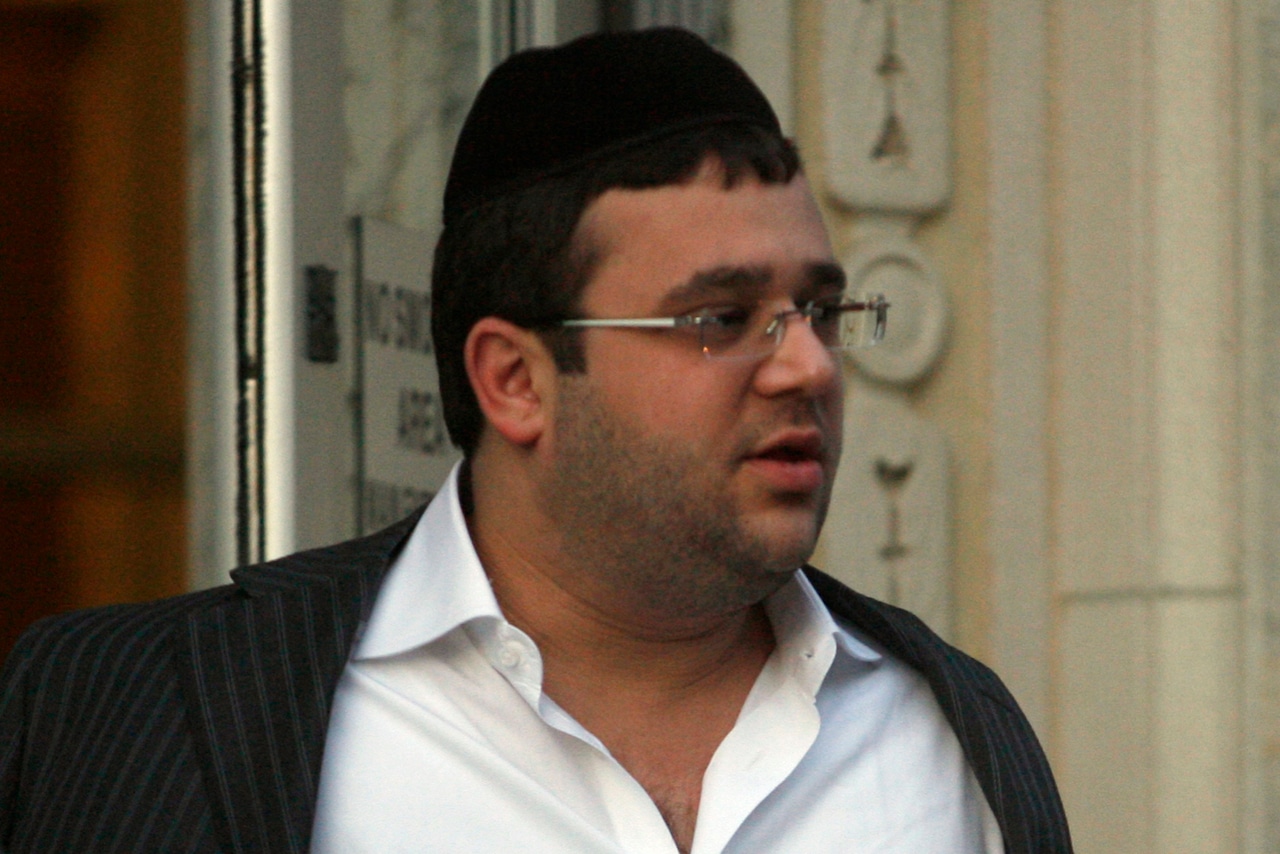
A New Jersey scam artist whose federal prison sentence was commuted by President Donald Trump in 2021 is headed back to jail for running a new Ponzi scheme after he was freed.
Eliyahi Weinstein, 51, of Lakewood was sentenced to 37 years in federal prison by a federal judge in Trenton on Friday, according to court documents.
Judge Michael A. Shipp also ordered Weinstein to pay $44,294,803 in restitution, due immediately.
Weinstein will also be subject to three years of supervised release when he is released from prison.
He was convicted by a jury on March 31, 2025.
After being granted clemency on the last day of Trump’s first term in office on Jan. 19, 2021, Weinstein started working with Aryeh “Ari” Bromberg and others to solicit investments through a company called Optimus Investments Inc., prosecutors alleged. The indictment also accuses Weinstein of using the fake name “Mike Konig” to hide his criminal history from prospective investors.
Investors were told that their funds would be invested in COVID-19 masks, baby formula —which was scarce at the time — and first-aid kits for the Russia-Ukranian war.
By February 2022, Optimus and Tryon Management Group LLC, the other company allegedly involved, did not have enough funds to pay back investors, according to the indictment. The companies then tried to hide this by paying them money from other investors in a Ponzi-like scheme and claimed that the funds came from investment returns, authorities alleged.
Weinstein finally revealed his true identity to Christopher Anderson and Richard Curry, the two men who operated Tyron, in August 2022, investigators said. Anderson and Curry then helped him to continue concealing his identity from investors and attempted to raise more money to pay off the investors and keep the Ponzi scheme going, the indictment alleged.
Weinstein was one of 140 people who were granted clemency by Trump. Weinstein, who had served eight years of his 24-year sentence, was required to serve three years of parole upon his release.
He had been convicted in two separate cases — a $200 million Ponzi scheme involving a portfolio of fake real estate investments and a second scam in which he duped a single investor out of $6.7 million after tricking the victim into thinking that he had an inside track on hard-to-get shares of the Facebook initial public offering.
If you purchase a product or register for an account through a link on our site, we may receive compensation. By using this site, you consent to our User Agreement and agree that your clicks, interactions, and personal information may be collected, recorded, and/or stored by us and social media and other third-party partners in accordance with our Privacy Policy.
