


A federal judge on Tuesday said he will issue a written opinion on whether charges against Rep. LaMonica McIver (D-Newark) should be dismissed on constitutional grounds, but did urge prosecutors to have the government delete online statements critical of McIver and continue handing over key evidence from the case, including footage and government policies.
District Judge Jamel Semper heard oral arguments over a set of motions filed by McIver’s legal team, including a pair that call for the dismissal of the case. Federal prosecutors accused McIver of assaulting federal officers during a brief scuffle outside Delaney Hall, a migrant detention facility in Newark that she had visited to inspect (McIver said officers had assaulted her). The scrum broke out as federal officers left the facility to arrest Newark Mayor Ras Baraka on trespassing charges that were later dropped.
McIver’s attorneys have argued the Constitution’s Speech or Debate clause bars the government from prosecuting members of Congress for conduct that’s part of their duties as legislators. Semper asked whether all conduct during a legislative visit would be immune under the Constitution, or whether individual, non-legislative acts should be considered separately. Paul Fishman, a defense attorney for McIver, said the congresswoman only visited the facility to conduct oversight and argued that federal officers illegally tried to obstruct that oversight, including by arresting Baraka. The prosecutors argued her immunity for “integral” legislative work does not apply to the scuffle, quoting case law that states the clause “cannot be used as a shield for criminal conduct.”
Also in question was whether prosecutors unlawfully conducted a “selective prosecution” of McIver because of her work against the Trump administration. In documents, they’ve compared the prosecution to the pardoning and dismissal of cases of pro-Trump protesters who stormed the Capitol on Jan. 6, 2021, while attempting to disrupt the certification of Joe Biden’s presidential victory. Her attorneys said their conduct was far more severe, but they were granted the benefit of a pardon and dismissal.
Semper asked why, if it had been selective, hadn’t the Trump administration also charged Reps. Bonnie Watson Coleman (D-Ewing) and Rob Menendez (D-Jersey City), who were with McIver during the scuffle.
He repeatedly referred to the “68 seconds” of the scuffle and asked the attorneys to what extent the scope of the case should be limited to those 68 seconds. McIver’s team said the entire day should be considered throuhgout the case, that her presence at Delaney Hall and in the scuffle is dependent on her legislative work. Prosecutors, meanwhile, argued the surrounding circumstances don’t change the main allegation that she assaulted a federal officer.
There’s no clear timeline on when Semper could issue a ruling.
Semper said some of the Trump administration’s online statements about McIver’s arrest run “counter to the facts” and told prosecutors to “redouble their efforts” to have certain social media posts deleted and protect McIver’s right to a defense. Semper pointed out that some of the statements, including allegations that McIver and her congressional colleagues trespassed into Delaney Hall, even though they were invited onto the premises and possess a statutory right to inspect facilities of the Department of Homeland Security.
Semper also pushed the prosecutors to continue sharing video footage and other pieces of key evidence (McIver’s attorneys had previously called the discovery deficient). The congresswoman’s attorneys said they received two dozen video files of the congressional tour, averaging about four minutes per video, and asked for the whole files. Prosecutors said all surveillance footage including the members of Congress had been sent over.
McIver’s attorneys also reemphasized their request for footage from body-worn cameras belonging to officers in the scuffle. The prosecutors said they did not possess any such footage. The judge said all footage should be given to the defense, unless there could be a security issue.
Lee Cortes, an attorney for McIver, also said all communications between federal agents during the confrontation should be released; he said that if the agents did not feel fear, intimidation, or harm during the event, it could undercut the prosecution’s allegations in a trial. Prosecutor Mark McCarren said it is the defendant’s actions, not the victim’s perception, that determines whether a crime has been committed.
Attendees at the hearing included Baraka, Watson Coleman, Menendez, and Rep. Nellie Pou (D-North Haledon).
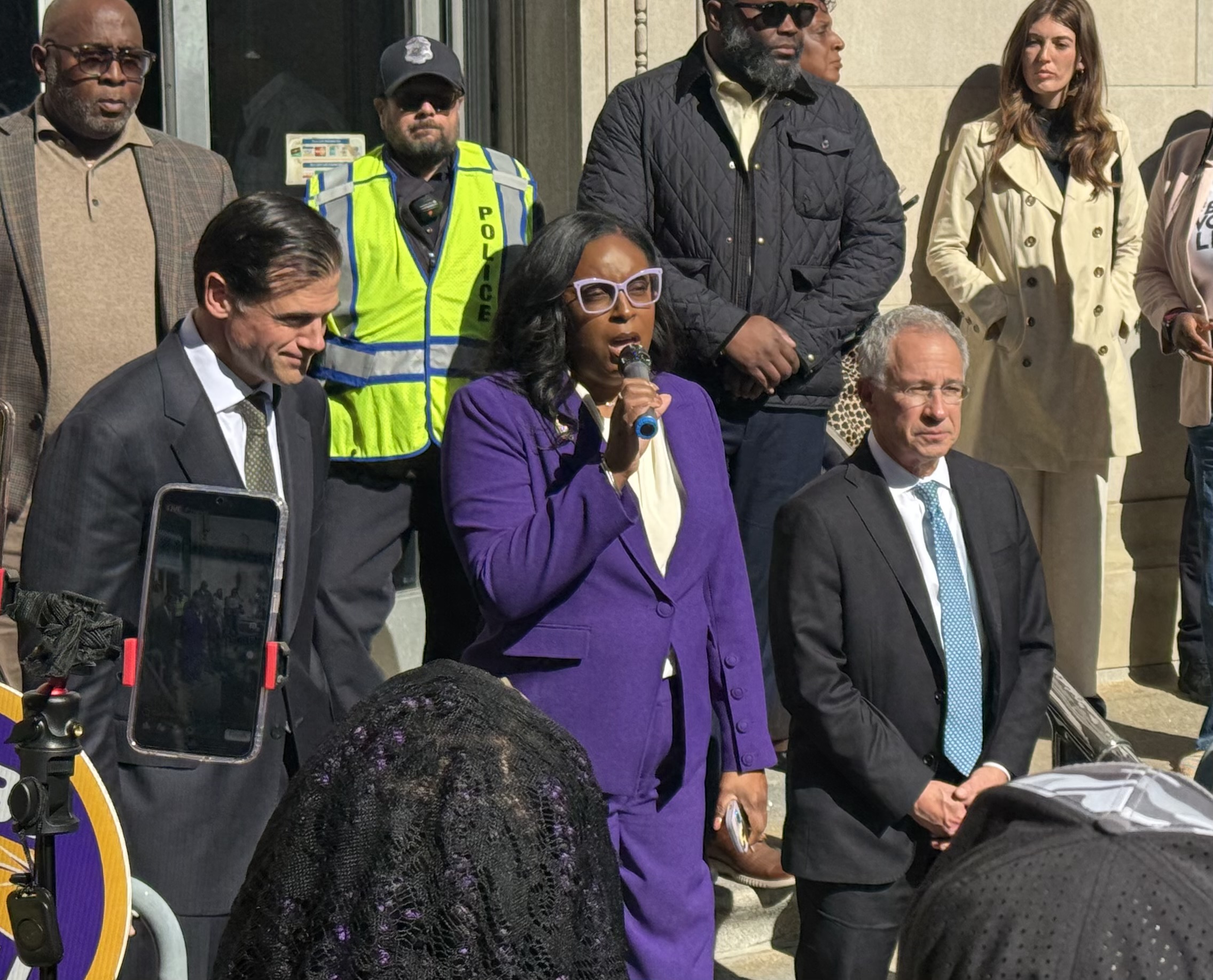
“It’s clear why this is happening,” McIver told a crowd of supporters outside the courthouse. “It’s because I was doing my job, and I will continue to do so. I’m not going to stop holding this administration accountable.”
