


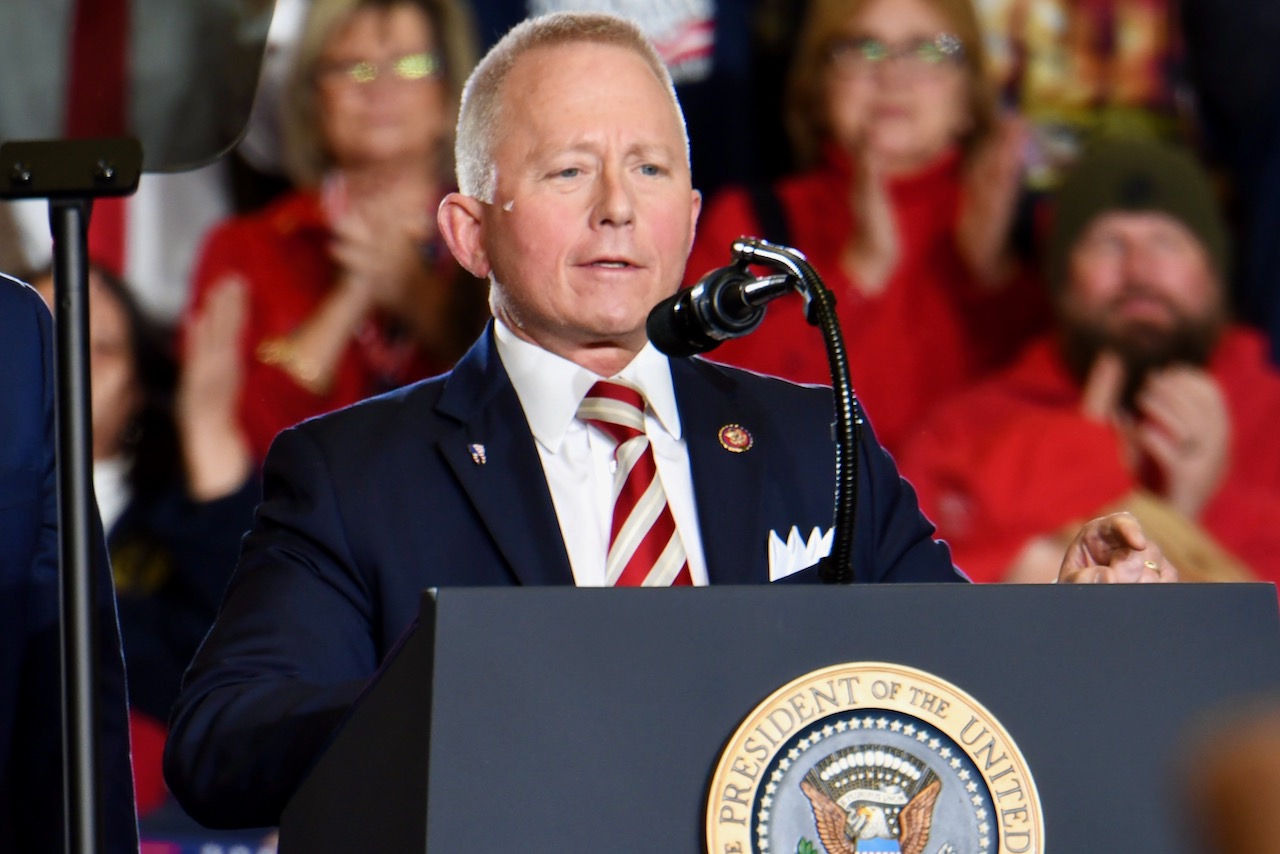
Some Democrats have hopes of forcing Rep. Jeff Van Drew (R-Dennis) into a competitive race next year in New Jersey’s Republican-leaning 2nd congressional district, but they’ll start out at a financial disadvantage against the four-term congressman.
Van Drew raised $368,910 in the 3rd quarter of 2025, a fairly standard fundraising quarter for him. It was enough for him to break $1 million in his campaign warchest; he ended the quarter with $1,110,378 on-hand.
His best-funded Democratic opponent, meanwhile, is former USAID official Bayly Winder, who raised $139,228 over the course of the quarter. Winder entered the race shortly before the prior quarter ended and raised $171,552 during his first week in the race, putting him at $310,780 raised for his campaign overall; he had $201,333 on-hand at the end of September.
“This campaign is about building a grassroots movement from the ground up,” Winder said. “In just over three months, we’ve hosted town halls, organized community forums, and visited every corner of this district to meet voters where they are. The fact that more than a thousand people have already stepped up to invest in this campaign, including hundreds from across this district, shows that South Jersey is ready for change – and ready to send Jeff Van Drew packing.”
That may put Winder behind Van Drew, but it also gives him a huge advantage over the rest of the Democratic primary field.
Tim Alexander, who was the Democratic nominee for the 2nd district in 2022 and narrowly lost a primary for the seat in 2024, raised a little over $9,000 and has just $1,470 left in his campaign account. Alexander said that his focus for now is on New Jersey’s state-level elections, and accused candidates who are fundraising more proactively of selfishness.
“I believe someone who has an aggressive fundraising campaign before this November’s election cares more about themselves than about saving democracy,” Alexander said. “I kept my word and put this year’s ticket first. As an advocate for South Jersey, the right thing was to help our 2025 Democrats win, even if it meant my numbers would be modest.”
Winder’s own press release on his funding numbers hit back at Alexander in kind, calling him a “perennial candidate whose previous campaign ended deeply in debt.”
Two other Democrats running for the district, Terri Reese and Bill Finn, have not filed Q3 reports; they might be running late in doing so, or they may not have reached the $5,000 threshold for required reporting.
The 2nd district voted for Donald Trump by double digits last year as Van Drew won re-election 58%-41%, making it a difficult climb for any Democrat looking to flip the seat. Nevertheless, an outside Democratic group polled the district earlier this year and said they believed Van Drew to be potentially vulnerable, indicating at least some national interest in the seat.
This story was updated at 10:46 a.m. with comment from Winder.
