


There is an age-old reference about folks who can’t see the forest from the trees. I have always found this statement interesting and applicable to many in the business of politics. Just so we are clear, this analogy speaks to someone who remains focused on small or minor details so deeply that they are unable to see the larger picture.
I recently read about a confrontation that occurred years ago that happened to showcase this idiom to perfection. Time to open the classified documents on Operation Paul Bunyan, which was a military operation that should have never occurred.
The year was 1976 and the temperature around the DMZ was particularly hot as the United Nations and the Americans tried to keep peace around the border between North and South Korea. This 38th parallel marked the symbolic border between those countries and both sides were heavily guarded.
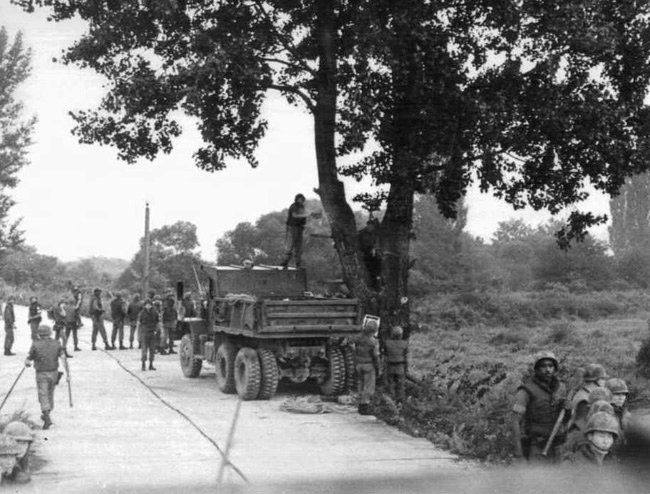
At some point in time, the UN forces were reviewing the visibility and vulnerability of their vantage points in and around this highly important and strategic piece of real estate, and as odd as it sounds, a decision was made to trim back a poplar tree that was obstructing the view into the border. Both sides agreed to this, and the UN sent in a tree-trimming contingent to get the job done. Seems routine right?
After a few moments of peace, and without provocation, the North Korean leader gave the order to attack the unsuspecting and unarmed landscapers. Two Americans, who were UN workers, were killed and this led to an immediate escalation of hostilities along the already smoldering patch of disputed land.
In response to this senseless and unprovoked attack, the United States and the United Nations held several high-level meetings, and it was agreed that two points needed to be taken:
Point One – Something must be done to prevent this tragedy from happening again.
Point Two – Retribution was sought.
The rapid response plan was developed and signed off by the White House, including an explicit approval by President Gerald Ford. Operation Paul Bunyan was born, and this plan was created to flex some military muscle to show the North Koreans that their despicable act of aggression wouldn’t go without penalty.
Operation Paul Bunyan entailed having the U.S. and allies gather over 800 military personnel, with bombers standing in the ready along, with heavily armed helicopters and armored vehicles accompanying them as they entered the zone. This pronounced and loud entrance was done to not only trim the offending tree, but to cut it down and let it be seen in its soon fallen state and to serve notice that future acts of aggression would be met with great military force.
To fully understand this entire story, it needs to be understood that this tree held much significance as the North Koreans thought the tree was planted by their leader some years prior. The United States fully understood the import and specialness of this tree and they knew that destruction of this near religious artifact would have profound implications.
As the military operation commenced, the North Koreans responded with 200 men with machine guns and they watched helplessly as Operation Paul Bunyan went live and this tree was unceremoniously cut and dismembered. The limbs were left in plain view for all to see. Think Benito Mussolini and his mistress, Clara, as they were shot and left on display publicly to send a message to others.
After much discussion and debate about the aftereffects, the leader of the North Koreans, Kim II Sung, apologized for the earlier incident and walked back his earlier threats and recriminations. The leader was reprimanded by his own allies and told to apologize and own up to this now worldwide crisis. It was highly unusual and highly embarrassing for the North Korean to be seen in an apologetic state, but that all changed after Operation Paul Bunyan was concluded.
I hope this historical example serves as a reminder about the ability to see the forest from the trees, this time literally.
